Showing posts with label shrub. Show all posts

Rhus - Sumac


Latin plant name Rhus
Common plant name Sumac
Plant type Flowering shrub
Size (meters) <1 - 10 m
Distinguishing features The leaves are spirally arranged.

Rhus chinensis compounds possess strong antiviral, antibacterial, anticancer, hepatoprotective, antidiarrheal and antioxidant activities.

Myrthus - Myrtle


Latin plant name Myrtus
Common plant name Myrtle
Plant type Evergreen shrub
Size (meters) <1,5 - 3 m
Distinguishing features The leaf is entire, 3–5 cm long, with a fragrant essential oil. The star-like flower has five petals and sepals, and numerous stamens. Petals usually are white. The fruit is a round berry containing several seeds, most commonly blue-black in colour. A variety with yellow-amber berries is also present. The flower is pollinated by insects, and the seeds are dispersed by birds that eat the berries.

It flowers in the late summer.

It is used in the islands of Sardinia and Corsica to produce an aromatic liqueur called "Mirto".

Arbutus unedo - Strawberry tree


Latin plant name Arbutus unedo
Common plant name Strawberry tree
Plant type Evergreen shrub
Size (meters) < 5 - 10 m
Distinguishing features The leaves are dark green and glossy.

The hermaphrodite flowers are white (rarely pale pink)

The fruit is a red berry, 1–2 cm diameter, with a rough surface, maturing 12 months at the same time as the next flowering. The fruit is edible, though many people find it bland and meally;

Grows well in limy soils.

Arbutus unedo is widespread in the Mediterranean region, western France, western Ireland, southern Portugal and western Turkey.

Its disjunct distribution, with an isolated relict population in southwestern Ireland, notably in Killarney, is a remnant of former broader distribution during the milder climate of the Atlantic period
It is the symbol of Madrid city.

It is the only plant that is native (it survived the ice age) to Ireland and not to the UK.

Berberis


Latin plant name Berberis
Common plant name
Plant type Evergreen shrub
Size (meters) <1,5 - 3 m
Distinguishing features Many deciduous species are noted for their attractive pink or red autumn colour. In some evergreen species from China the leaves are brilliant white beneath, a feature valued horticulturally.

The flowers are produced singly or in racemes of up to 20 on a single flower-head. They are yellow or orange, 3-6 mm long.

The fruit is a small berry 5-15 mm long.

They work very good for hedging.

Very thorny.

Digitalis - Foxglove


Latin plant name Digitalis
Common plant name Foxglove
Plant type Herbaceous perennial shrub
Size (meters) <50-255 cm
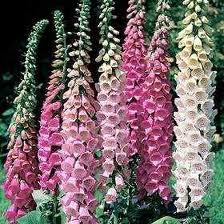
Distinguishing features The scientific name means "finger-like" and refers to the ease with which a flower of Digitalis purpurea can be fitted over a human fingertip. The flowers are produced on a tall spike, are tubular, and vary in colour with species, from purple to pink, white, and yellow.

A group of medicines extracted from foxglove plants are called Digitalin.

Digitalis toxicity (Digitalis intoxication) results from an overdose of digitalis and causes anorexia, nausea, vomiting and diarrhoea, as well as sometimes resulting in xanthopsia (jaundiced or yellow vision) and the appearance of blurred outlines (halos). Bradycardia also occurs. Because a frequent side effect of digitalis is reduction of appetite, some individuals have used the drug as a weight-loss aid.

Choisya ternata


Latin plant name Choisya ternata
Common plant name Mexican orange
Plant type Aromatic evergreen shrub
Size (meters) < 2 m
Distinguishing features Choisya species are popular ornamental plants in areas with mild winters, grown primarily for their abundant and fragrant flowers. The foliage is also aromatic, smelling of rue when bruised or cut.

Photinia fraseri - Red robbin


Latin plant name Photinia fraseri
Common plant name Red robbin
Plant type Evergreen shrub
Size (meters) < 2 m
Distinguishing features Photinias typically grow from 3–15 m tall, with a usually irregular crown of angular branches; the branches are often (not always) thorny. The leaves are alternate, entire or finely toothed.

The majority of species are evergreen but several are deciduous. The flowers are produced in early summer in dense terminal corymbs; each flower is 5–10 mm diameter, with five rounded white petals; they have a mild, hawthorn-like scent.

The fruit is a small pome, 4–12 mm across, bright red and berry-like.

Buxus sempervirens - Boxwood


Latin plant name Buxus sempervirens
Common plant name Boxwood
Plant type Woody evergreen shrub
Size (meters) < 35 m
Distinguishing features Arranged in opposite pairs along the stems, the leaves are green to yellow-green.

Slow growth of box renders the wood ("boxwood") very hard (possibly the hardest in Europe) and heavy, and free of grain produced by growth rings, making it ideal for cabinet-making, the crafting of clarinets, engraving, marquetry, woodturning, tool handles, mallet heads and as a substitute for ivory.

It was used for the propellers in I World War.

The biggest boxwood trees (35m) are found in Ireland because they were not cut down during the war.

Lonicera periclymenun - Privet


Latin plant name Lonicera periclymenun
Common plant name Privet
Plant type Shrub
Size (meters) < 2 m
Distinguishing features Ideal for hedges.

Cotoneaster


Latin plant name Cotoneaster
Common plant name Cotoneaster
Plant type Semievergreen woody shrub
Size (meters) < 5 m
Distinguishing features The leaves are arranged alternately, 0.5–15 centimetres (0.20–5.9 in) long, ovate to lanceolate, entire; both evergreen and deciduous species occur.

The flower is either fully open or has its five petals half open 5–10 millimetres (0.20–0.39 in) diameter. They may be any shade from white through creamy white to light pink to dark pink to almost red,

The fruit is a small pome 5–12 millimetres diameter, pink or bright red, orange or even maroon or black when mature, containing one to three seeds. Fruit on some species stays on until the following year.

The flowers attract bees and butterflies and the fruits are eaten by birds.

They are used as a valuable source of nectar when often the bees have little other forage in the June Gap. The red berries are also highly attractive to blackbirds and other thrushes.

Lonicera peryclymenum - Honeysuckle


Latin plant name Lonicera periclymenum
Common plant name Honeysuckle
Plant type Low growing grand cover shrub
Size (meters) < 10 m
Distinguishing features Honeysuckle is valued in the garden, for its ability to twine around other plants, or to cover unsightly walls or outbuildings; and the intense fragrance of its profuse flowers in summer.

It needs to be planted with its roots in the shade, and its flowering top in sun or light shade.

They have green and light cream leaves.

Sambucus nigra - Black elder


Latin plant name Sambucus nigra
Common plant name Black elder - Elderberry
Plant type Shrub
Size (meters) < 2 m
Distinguishing features It is grown for the berries and the flowers that can be used for drinks (sambuca drink). The berries are edible after cooking and can be used to make jam, jelly, chutney and Pontack sauce.

The fruit is a dark purple to black berry 3–5 mm diameter, produced in drooping clusters in the late autumn; they are an important food for many fruit-eating birds, notably Blackcaps.

The flowers can be used to make an herbal tea as a remedy for inflammation caused by colds and fever.

It has hollow stams  that can be used for stakes. The stams are opposite, not like the maple that are alternative.

The shiitake mushrooms grow under the elders.

It needs alcaline soils with lime and stones.

Aucuba japonica - Spotted laurel


Latin plant name Aucuba japonica
Common plant name Spotted laurel
Plant type Evergreen woody shrub
Size (meters) < 1,5 m
Distinguishing features The leaves are opposite, broad lanceolate.

Aucuba japonica are dioecious, they have separate male and female plants.

The flowers are small, 4-8 mm diameter, with four purplish-brown petals.

The fruit is a red berry approximately 1 cm in diameter, which is avoided by birds.

Laurus novelis - Bay laurel


Latin plant name Laurus novelis
Common plant name Bay laurel
Plant type Hedge evergreen shrub
Size (meters) < 1,5 m
Distinguishing features Dark ornamental leaves.

Yellow flowers in spring followed by green and then black fruits.

It is idea for shapping but needs to keep trimming it.

Bay is widely cultivated as an ornamental plant. It is used to create single erect stems with ball-shaped, box-shaped or twisted crowns; also for low hedges.

Laurel oil is a main ingredient, and the distinguishing characteristic of Aleppo soap. Aleppo soap is revered worldwide for its skin care properties.

The plant is the source of several popular spices used in a wide variety of recipes, particularly among Mediterranean cuisines.

Lonicera nitida - Poorman's box


Latin plant name Lonicera nitida
Common plant name Poorman's box
Plant type Perennial Shrub
Size (meters) < 1 m
Distinguishing features The species is a broadleaf evergreen shrub.

The leaves are dark green and 6–16 millimeters long.

The flowers are creamy white, fragrant, 6 millimeters long, and grow in pairs. They appear at the end of spring. The fruit (rarely formed on clipped specimens) is an inedible bluish-purple berry about 6 millimeters in diameter.

The growth rate is moderate or fast growing.

The species is resistant to deer and rabbits. Birds are attracted to the species.

The species is commonly confused with cotoneaster species. The difference between the two is that cotoneaster has alternate leaves while this species has opposite leaves.

Hydrangea - Hortensia


Latin plant name Hydrangea
Common plant name Hortensia
Plant type Woody flowering shrub
Size (meters) < 2 m
Distinguishing features Hydrangea flowers are produced from early spring to late autumn; they grow in flowerheads at the ends of the stems. In many species, the flowerheads contain two types of flowers, small fertile flowers in the middle of the flowerhead, and large, sterile bract-like flowers in a ring around the edge of each flowerhead.

The color is affected by the pH of the soil; going from white to black, through blue, pink, red and purple. White flowers in the most acid soils and black in the most alcalines. The coffee in the soil will turn the flowers into black. The concrete close to the plant, as it contains lime, will turn the soil into alcaline and  the flowers will be darker.

Prunus laurocerasus - Cherry laurel


Latin plant name Prunus laurocerasus
Common plant name Cherry laurel
Plant type Evergreen shrub
Size (meters) < 2 m
Distinguishing features It flowers in April, with white spiky florets growing along stems up to 10 cms long. These are followed by small black fruits. The fruits are poisonous for dogs.

This is a very useful shrub for hedging and screening since it is dense and fast-growing.

Although the common names of Prunus laurocerasus refer to the similarity of foliage and appearance to bay laurel (Laurus nobilis, the true laurel, in the Lauraceae family), the two plants are in fact unrelated, being not only in different genera but also different families.

Rosa robosa - Japanese rose


Latin plant name Rosa rugosa
Common plant name Japanese rose
Plant type Woody flowering shrub
Size (meters) < 1,5 m
Distinguishing features Single pink flower nicely scented.

They can be either cultivated or wild.

They flower during the summer a flat flower and have continous flowering.

Attractive red hips that can be used in jellies and drinks.

Hypericum hidcote


Latin plant name Hypericum hidcote
Common plant name St. John's wort
Plant type Woody semievergreen shrub
Size (meters) < 2 m
Distinguishing features Lovely yellow flower 2 inches diameter.


Ribes rubrum - Black, white and red currant


Latin plant name Ribes (nigra, glandulosum and rubrum)
Common plant name Black, white and red currant
Plant type Fruiting deciduos woody shrub
Size (meters) < 1,5 m
Distinguishing features Thornless stems.

The flowers are inconspicuous yellow-green, in pendulous 4–8 cm racemes, maturing into bright red translucent edible berries about 8–12 mm diameter, with 3-10 berries on each raceme.

With maturity, the tart flavour of redcurrant fruit is slightly greater than its blackcurrant relative, but with the same approximate sweetness. The albino variant of redcurrant, often referred to as white currant, has the same tart flavour but with greater sweetness. Although frequently cultivated for jams and cooked preparations, much like the white currant, it is often served raw or as a simple accompaniment in salads, garnishes, or drinks when in season.

Deciduous plant.