Showing posts with label herbaceous. Show all posts

Oxalis tuberosa - Oca


Latin plant name Oxalis tuberosa
Common plant name Oca
Plant type Perennial herbaceous plant
Size (meters) < 1m
Distinguishing features The plant is not known in the wild, but populations of wild Oxalis species that bear smaller tubers are known from four areas of the central Andean region. Oca was introduced to Europe in 1830 as a competitor to the potato.

Oca is cultivated primarily for its edible stem tuber, but the leaves and young shoots can be eaten as a green vegetable also. Andean communities have various methods to process and prepare tubers, and in Mexico oca is eaten raw with salt, lemon, and hot pepper.

Oca is fairly high in oxalates, concentrated in the skin, and the bioavailability of oxalate appears to be similar to spinach.
Oca is one of the important staple crops of the Andean highlands, due to its easy propagation, and tolerance for poor soil, high altitude and harsh climates.

Oca needs a long growing season, and is day length dependent, forming tubers when the day length shortens in autumn (around March in the Andes). In addition, oca requires climates with average temperatures of approximately 10 to 12°C (range: 4°C to17°C) and average precipitation of 700 to 885 millimeters per year.

In areas with harsh winter climates, early frosts may cut back the foliage before the tubers have a chance to form. In tropical areas where the days are unchanging in length, oca will not set a crop successfully.

Digitalis - Foxglove


Latin plant name Digitalis
Common plant name Foxglove
Plant type Herbaceous perennial shrub
Size (meters) <50-255 cm
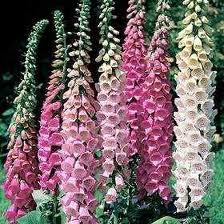
Distinguishing features The scientific name means "finger-like" and refers to the ease with which a flower of Digitalis purpurea can be fitted over a human fingertip. The flowers are produced on a tall spike, are tubular, and vary in colour with species, from purple to pink, white, and yellow.

A group of medicines extracted from foxglove plants are called Digitalin.

Digitalis toxicity (Digitalis intoxication) results from an overdose of digitalis and causes anorexia, nausea, vomiting and diarrhoea, as well as sometimes resulting in xanthopsia (jaundiced or yellow vision) and the appearance of blurred outlines (halos). Bradycardia also occurs. Because a frequent side effect of digitalis is reduction of appetite, some individuals have used the drug as a weight-loss aid.

Gunnera


Latin plant name Gunnera
Common plant name Gunnera
Plant type Herbaceous flowering plant
Size (meters) < 6 m
Distinguishing features The stalks of G. tinctoria (nalcas), from Southern Chile and Argentina, are edible. Their principal use is fresh consumption, but also they are prepared in salads, liquor or marmalade. Leaves of this species are used in covering curanto (a traditional Chilean food).

Gunnera perpensa is used as a source of traditional medicine in Southern Africa.

In the British islands gunnera is used as a decoration plant in gardens.

True Geranius - Cranesbill


Latin plant name Geranium
Common plant name Cranesbill
Plant type Hardy herbaceous flowering plant
Size (meters) < 0,5 m
Distinguishing features The long, palmately cleft leaves are broadly circular in form. The flowers have five petals and are coloured white, pink, purple or blue, often with distinctive veining. Geraniums will grow in any soil as long as it is not waterlogged. Propagation is by semiripe cuttings in summer, by seed, or by division in autumn or spring.

They are perect for hedges.

Dahlia


Latin plant name Dahlia
Common plant name
Plant type Semievergreen bulbous herbaceous flowering plant 
Size (meters) < 1 m
Distinguishing features The flowers can have different colours and shapes. They do not have scent. Like most plants that do not attract pollinating insects through scent, they are brightly colored, displaying most hues, with the exception of blue.

They are the official flower of Mexico. In the first trips of Hernán Cortés to Mexico, he reported they were used for a food source by the indigenous peoples, and were both gathered in the wild and cultivated. The Aztecs used them to treat epilepsy and employed the long hollow stem of the (Dahlia imperalis) for water pipes.

Crocosmia - Montbretia


Latin plant name Crocosmia
Common plant name Montbretia
Plant type Perennial herbaceous bulbous
Size (meters) < 0,5 m
Distinguishing features Orange flowers, long green leaves. These flower from early summer well into fall. The fertile flowers are hermaphroditic. They are pollinated by insects, birds (hummingbirds) or by the wind.

When the plant does not give flowers, it means that the bulbs have gotten to tight and need to be split.

Tropaeolum - Nasturtium


Latin plant name Tropaeolum
Common plant name Nasturtium
Plant type Perennial herbaceous climbing plant
Size (meters)
Distinguishing features The leaves and the flowers are edible and are often used for salads. The unripe seeds can be used instead of capers, or dropped into vinager to create a condiment. It has orange-yellow flowers and nice round leaves. It has climbing habits and does not maintain a shape.

Nastortiums need a free draining soil and some sun to be able to grow up properly.

Helianthus tuberosus - Jerusalem artichokes


Latin plant name Pteridium esculentum
Common plant name Jerusalem artichokes
Plant type Herbaceous perennial plant
Size (meters) <1,5 - 3 m
Distinguishing features It has opposite leaves on the lower part of the stem. The leaves have a rough, hairy texture

The flowers are yellow, member of the daisy flower.

The tubers are elongated and uneven, typically 7.5–10 centimetres. They are edible, a little bit tasteless. They need to be

They will die during the winter and grow next year. It is hard to get rid of them.

They are good to soften the soil.
In the garden we had some Jerusalmen artichokes. We cleared them and got the tuburs to plant for the next season.