Showing posts with label flowering. Show all posts

Flowering plants

They are divided into 250 groups. In each of the groups there are plants that are edible and some that are poisonous. Each group has similar flowers. Each of the groups would also have specific diseases that is why the crop rotation is needed, so diseases do not get used to the plants of that group.

The most important families are:

  • Brassicas (they have buds;  cabbagecauliflowerbroccoliBrussel sprouts...)
  • Legumes-Fabaceae or Leguminosae (they have a pod that contains seeds;  alfalfa, clover, peas, beans, lentils, lupins, mesquite, carob, soybeans, peanuts...)
  • Apiaceae (carrot family, root crops; angelica, anise, arracacha, asafoetida, caraway, carrot, celery, Centella asiatica, chervil, cicely, coriander/cilantro, cumin, dill..)
  • Curcurbit-Cucurbitaceae (cucumber family;  cucumber, pumpkins, luffas, and watermelons...)
  • Solanum (Most parts of the plants, especially the green parts and unripe fruit, are poisonous to humans (although not necessarily to other animals), but many species in the genus bear some edible parts, such as fruits, leaves, or tubers. Several species are cultivated, including three globally important food crops:
  1. Tomato, S. lycopersicum (they do not grow tubers ant the tomatoes are edible)
  2. Potato, S. tuberosum (the tomatoe/berries that grow in the potato plant are poisonous)
  3. Eggplant, S. melongena (the tomatoes (aubergines i.e.) are edible)

  • Rosaceae (rose family, the seeds look quite similar in all of them;  applesapricotsplumscherriespeachespears,raspberries, strawberries, rose...)
  • Polygonaceae (leaves are somehow triangular, the seeds are pyramidal; rhubarb, buckwheat, sorrels, ...)
  • Asteraceae - Thistle (aster means star in greek, its name its related to the inflorescence star form; daisies, fleabanechrysanthemumsdahliaszinnias, globe artichoke, sowthistle, hawkweed, dandelion...)
  • Amaryllidaceae - Allium (bulbous flowering plant; onion, garlic, leeks, tulips, lily, ....)
  • Poaceae/Gramineae (grass family; wheat, ryegrass, oats, bamboos, thatch, ...)
  • Rubiaceae (coffee family; coffee, quinine, ...)

Groups of plants

Moss & Liquens Ferns Conifers Flowering plants
Non woody.

First plants to colonize Earth.

An area where there are moss & lichens it is a clean area.

The least moss and liquens there are, the most polluted its the area.
They reproduce by spores.

Unlike mosses, they have xylem and phloem (making them vascular plants).

They have stems, leaves, and roots like other vascular plants.

Ferns reproduce via spores and have neither seeds nor flowers.
Plants that produce cones.

They tolerate cold thanks to the resine.

Pinophytes are gymnosperms.

They are cone-bearing seed plants with vascular tissue; all extant conifers are woody plants, the great majority being trees with just a few being shrubs.
They propagate by flowers.

They evolved when insects appeared.

They were the last group to appear in Earth.

Rhus - Sumac


Latin plant name Rhus
Common plant name Sumac
Plant type Flowering shrub
Size (meters) <1 - 10 m
Distinguishing features The leaves are spirally arranged.

Rhus chinensis compounds possess strong antiviral, antibacterial, anticancer, hepatoprotective, antidiarrheal and antioxidant activities.

Myrthus - Myrtle


Latin plant name Myrtus
Common plant name Myrtle
Plant type Evergreen shrub
Size (meters) <1,5 - 3 m
Distinguishing features The leaf is entire, 3–5 cm long, with a fragrant essential oil. The star-like flower has five petals and sepals, and numerous stamens. Petals usually are white. The fruit is a round berry containing several seeds, most commonly blue-black in colour. A variety with yellow-amber berries is also present. The flower is pollinated by insects, and the seeds are dispersed by birds that eat the berries.

It flowers in the late summer.

It is used in the islands of Sardinia and Corsica to produce an aromatic liqueur called "Mirto".

Berberis


Latin plant name Berberis
Common plant name
Plant type Evergreen shrub
Size (meters) <1,5 - 3 m
Distinguishing features Many deciduous species are noted for their attractive pink or red autumn colour. In some evergreen species from China the leaves are brilliant white beneath, a feature valued horticulturally.

The flowers are produced singly or in racemes of up to 20 on a single flower-head. They are yellow or orange, 3-6 mm long.

The fruit is a small berry 5-15 mm long.

They work very good for hedging.

Very thorny.

Buddleja - Butterfly bush


Latin plant name Buddleja
Common plant name Butterfly bush
Plant type Herbaceous perennial plant
Size (meters) < 5 m
Distinguishing features The leaves are lanceolate in most species, and arranged in opposite pairs on the stems.

The flowers are produced in dense panicles 10–50 cm long; each individual flower is tubular, about 1 cm long, with the corolla divided into four spreading lobes.

Flower colour varies widely, with white, pink, red, purple, orange or yellow.

They grow a lot, sometimes it's conisdered invassive.

Magnolia


Latin plant name Magnolia
Common plant name Magnolia
Plant type Flowering plant
Size (meters) < 2 m
Distinguishing features The flowers evolved to encourage pollination by beetles. To avoid damage from pollinating beetles, the carpels of Magnolia flowers are extremely tough.

It is a suitable plant for schools gardens.

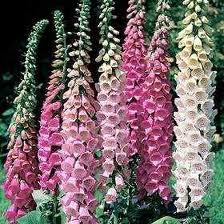
Digitalis - Foxglove


Latin plant name Digitalis
Common plant name Foxglove
Plant type Herbaceous perennial shrub
Size (meters) <50-255 cm
Distinguishing features The scientific name means "finger-like" and refers to the ease with which a flower of Digitalis purpurea can be fitted over a human fingertip. The flowers are produced on a tall spike, are tubular, and vary in colour with species, from purple to pink, white, and yellow.

A group of medicines extracted from foxglove plants are called Digitalin.

Digitalis toxicity (Digitalis intoxication) results from an overdose of digitalis and causes anorexia, nausea, vomiting and diarrhoea, as well as sometimes resulting in xanthopsia (jaundiced or yellow vision) and the appearance of blurred outlines (halos). Bradycardia also occurs. Because a frequent side effect of digitalis is reduction of appetite, some individuals have used the drug as a weight-loss aid.

Laburnum - Golden chain


Latin plant name Laburnum
Common plant name Golden chain
Plant type Decidious tree
Size (meters) < 2 m
Distinguishing features All parts of the plant are poisonous, and can be lethal if consumed in excess. Symptoms of laburnum poisoning may include intense sleepiness, vomiting, convulsive movements, coma, slight frothing at the mouth and unequally dilated pupils. In some cases, diarrhea is very severe, and at times the convulsions are markedly tetanic. The main toxin in the plant is cytisine, a nicotinic receptor agonist.

They have yellow pea-flowers in pendulous racemes 10–30 cm (4–12 in) long in spring, which makes them very popular garden trees.

Gunnera


Latin plant name Gunnera
Common plant name Gunnera
Plant type Herbaceous flowering plant
Size (meters) < 6 m
Distinguishing features The stalks of G. tinctoria (nalcas), from Southern Chile and Argentina, are edible. Their principal use is fresh consumption, but also they are prepared in salads, liquor or marmalade. Leaves of this species are used in covering curanto (a traditional Chilean food).

Gunnera perpensa is used as a source of traditional medicine in Southern Africa.

In the British islands gunnera is used as a decoration plant in gardens.

Choisya ternata


Latin plant name Choisya ternata
Common plant name Mexican orange
Plant type Aromatic evergreen shrub
Size (meters) < 2 m
Distinguishing features Choisya species are popular ornamental plants in areas with mild winters, grown primarily for their abundant and fragrant flowers. The foliage is also aromatic, smelling of rue when bruised or cut.

Prunus cerasifera nigra - Black cherry tree


Latin plant name Prunus cerasifera nigra
Common plant name Black cherry tree
Plant type Tree
Size (meters) 6 - 15 m
Distinguishing features It is grown for its flowers that can go from white to pinkish.

It doesn't have a juicy fruit.

The variety 'Nigra' with black foliage and pink flowers, has gained the Royal Horticultural Society's Award of Garden Merit.

Sambucus nigra - Black elder


Latin plant name Sambucus nigra
Common plant name Black elder - Elderberry
Plant type Shrub
Size (meters) < 2 m
Distinguishing features It is grown for the berries and the flowers that can be used for drinks (sambuca drink). The berries are edible after cooking and can be used to make jam, jelly, chutney and Pontack sauce.

The fruit is a dark purple to black berry 3–5 mm diameter, produced in drooping clusters in the late autumn; they are an important food for many fruit-eating birds, notably Blackcaps.

The flowers can be used to make an herbal tea as a remedy for inflammation caused by colds and fever.

It has hollow stams  that can be used for stakes. The stams are opposite, not like the maple that are alternative.

The shiitake mushrooms grow under the elders.

It needs alcaline soils with lime and stones.

Hydrangea - Hortensia


Latin plant name Hydrangea
Common plant name Hortensia
Plant type Woody flowering shrub
Size (meters) < 2 m
Distinguishing features Hydrangea flowers are produced from early spring to late autumn; they grow in flowerheads at the ends of the stems. In many species, the flowerheads contain two types of flowers, small fertile flowers in the middle of the flowerhead, and large, sterile bract-like flowers in a ring around the edge of each flowerhead.

The color is affected by the pH of the soil; going from white to black, through blue, pink, red and purple. White flowers in the most acid soils and black in the most alcalines. The coffee in the soil will turn the flowers into black. The concrete close to the plant, as it contains lime, will turn the soil into alcaline and  the flowers will be darker.

Prunus laurocerasus - Cherry laurel


Latin plant name Prunus laurocerasus
Common plant name Cherry laurel
Plant type Evergreen shrub
Size (meters) < 2 m
Distinguishing features It flowers in April, with white spiky florets growing along stems up to 10 cms long. These are followed by small black fruits. The fruits are poisonous for dogs.

This is a very useful shrub for hedging and screening since it is dense and fast-growing.

Although the common names of Prunus laurocerasus refer to the similarity of foliage and appearance to bay laurel (Laurus nobilis, the true laurel, in the Lauraceae family), the two plants are in fact unrelated, being not only in different genera but also different families.

Rosa robosa - Japanese rose


Latin plant name Rosa rugosa
Common plant name Japanese rose
Plant type Woody flowering shrub
Size (meters) < 1,5 m
Distinguishing features Single pink flower nicely scented.

They can be either cultivated or wild.

They flower during the summer a flat flower and have continous flowering.

Attractive red hips that can be used in jellies and drinks.

Californian poppy


Latin plant name Eschscholzia californica
Common plant name Californian poppy
Plant type Perennial plant
Size (meters) < 1,5 m
Distinguishing features The leaves are ternately divided into round, lobed segments. The flowers are solitary on long stems, silky-textured, with four petals; flower color ranges from yellow to orange, with flowering from February to September. The petals close at night or in cold, windy weather and open again the following morning, although they may remain closed in cloudy weather. The fruit is a slender, capsule which splits in two to release the numerous small black or dark brown seeds.

Hypericum hidcote


Latin plant name Hypericum hidcote
Common plant name St. John's wort
Plant type Woody semievergreen shrub
Size (meters) < 2 m
Distinguishing features Lovely yellow flower 2 inches diameter.


True Geranius - Cranesbill


Latin plant name Geranium
Common plant name Cranesbill
Plant type Hardy herbaceous flowering plant
Size (meters) < 0,5 m
Distinguishing features The long, palmately cleft leaves are broadly circular in form. The flowers have five petals and are coloured white, pink, purple or blue, often with distinctive veining. Geraniums will grow in any soil as long as it is not waterlogged. Propagation is by semiripe cuttings in summer, by seed, or by division in autumn or spring.

They are perect for hedges.

Dahlia


Latin plant name Dahlia
Common plant name
Plant type Semievergreen bulbous herbaceous flowering plant 
Size (meters) < 1 m
Distinguishing features The flowers can have different colours and shapes. They do not have scent. Like most plants that do not attract pollinating insects through scent, they are brightly colored, displaying most hues, with the exception of blue.

They are the official flower of Mexico. In the first trips of Hernán Cortés to Mexico, he reported they were used for a food source by the indigenous peoples, and were both gathered in the wild and cultivated. The Aztecs used them to treat epilepsy and employed the long hollow stem of the (Dahlia imperalis) for water pipes.